
For most students, seeing the teacher write on the board or reading from a textbook is a routine part of learning. For Risper Wanjiku, however, these simple tasks were daily challenges. Risper is a student living with congenital nystagmus, an eye condition present from birth that causes involuntary, repetitive eye movements. These movements make it difficult to focus steadily on objects, often resulting in blurred vision and reduced visual acuity. Children with congenital nystagmus frequently struggle with reading, recognizing distant objects, and keeping up in classroom environments, despite having the ability and desire to learn.
As Risper progressed through school, her visual challenges increasingly affected her ability to access learning materials. Reading information on the chalkboard, following classroom lessons, and completing assignments required extra effort, often leaving her frustrated and fatigued. While her determination remained strong, her visual impairment created barriers that limited her academic potential.
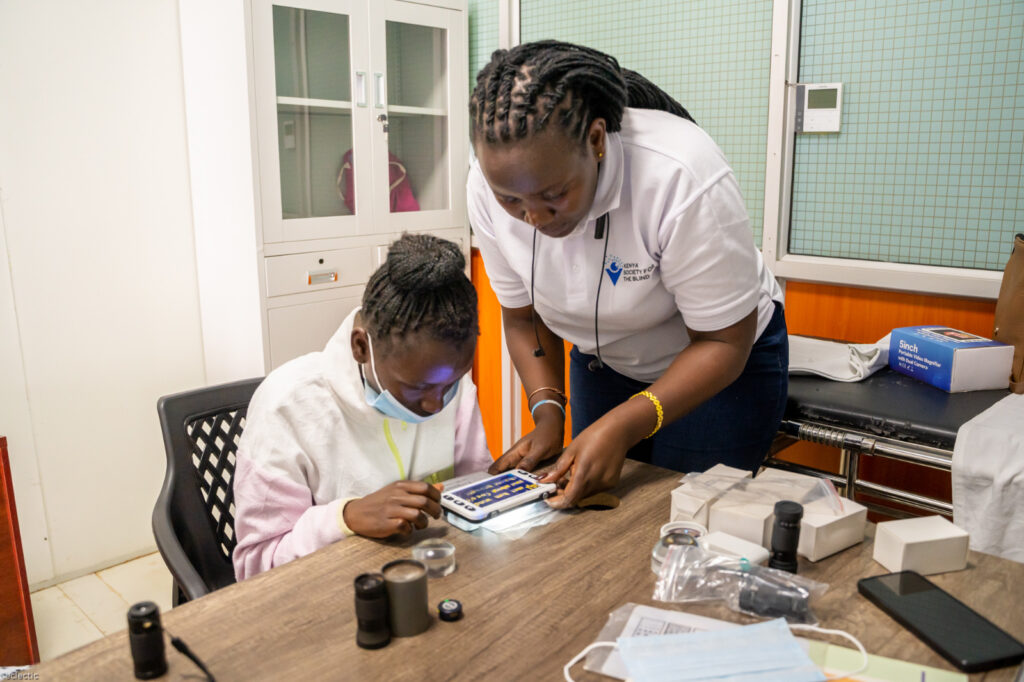
Recognizing the need for specialized intervention, Risper was referred for a comprehensive low vision assessment. During the assessment, specialists carefully evaluated her visual needs and explored solutions that could maximize her remaining vision.
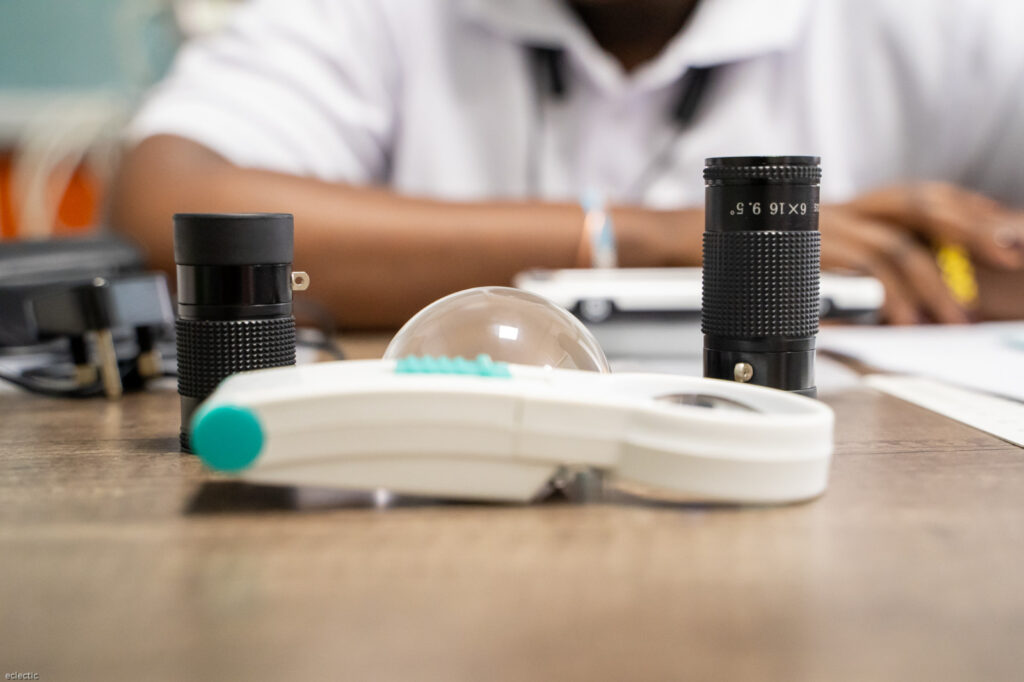
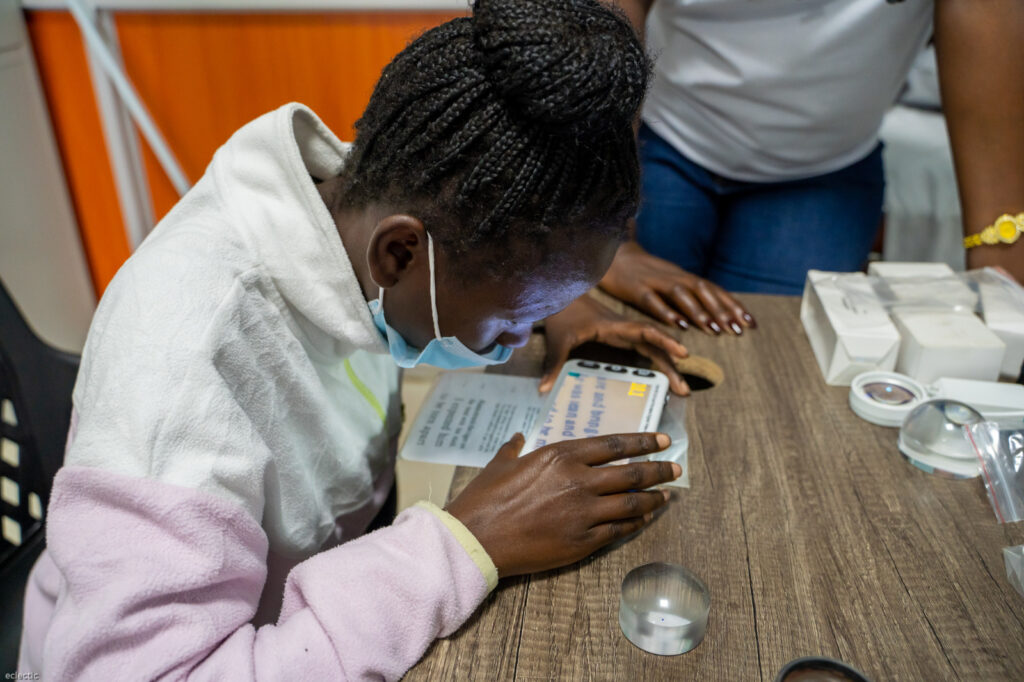
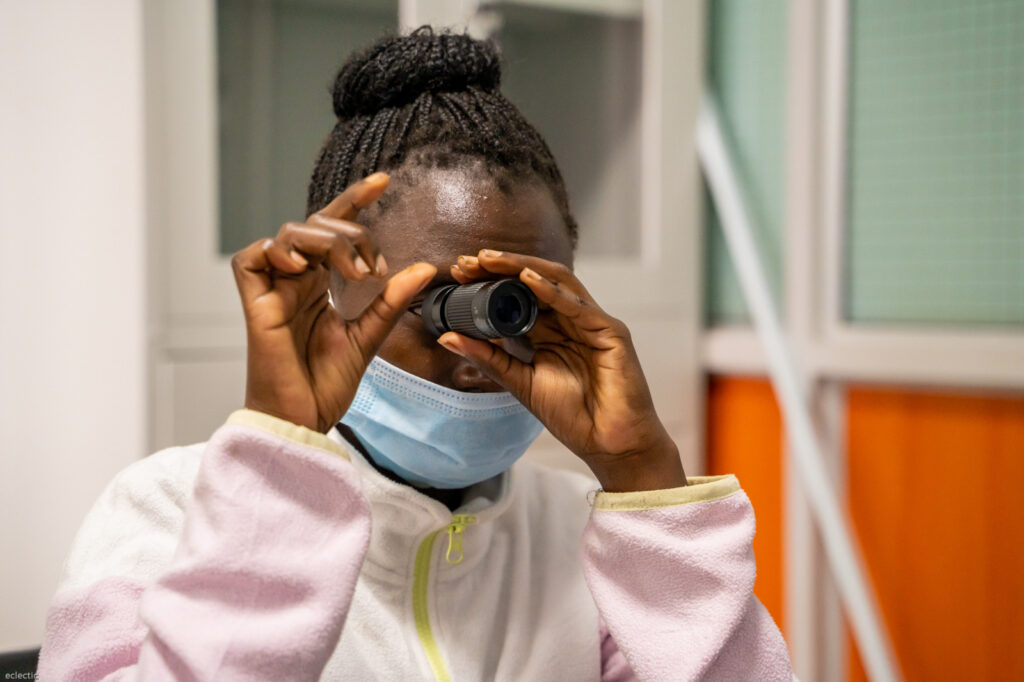
The assessment revealed that Risper could benefit significantly from low vision devices. She was prescribed a 6x telescope to help her see distant objects more clearly and a dome magnifier to enlarge text and images for near tasks such as reading and writing.
With the 6x telescope, Risper could clearly see information displayed at the front of the classroom, enabling her to follow lessons with greater ease and confidence. The dome magnifier made reading textbooks and completing assignments much more manageable, reducing the strain she had previously experienced.
As her access to learning improved, so did her academic performance. Teachers observed a remarkable improvement in her classroom participation, concentration, and overall school performance. Tasks that had once been difficult became achievable, allowing Risper to engage more fully in her education and demonstrate her true capabilities.
Today, Risper is thriving in school, equipped with the tools she needs to overcome the challenges posed by congenital nystagmus. Her story demonstrates how timely low vision assessments and appropriate assistive devices can unlock opportunities for learners with visual impairments, empowering them to succeed academically and pursue their dreams with confidence.
For Risper, the right support did more than improve her vision, it opened a clearer path to learning and a brighter future.